

| La Justice - June 14, 1925 |
|
Lord Grey's Memoirs On November 15, in a speech in Newcastle, Lord Grey declared that war was bound to break out in 1914 as a result of the increase in armaments: "Whatever Germany's responsibility may have been, I understand today, better than I did in 1914, that war had become really inevitable." These words, spoken at a time when the German government was questioning the Empire's responsibility, provoked legitimate emotion in England and on the continent, and we should be pleased today to see Lord Grey set the record straight in the series of articles just published in the Westminster Gazette. These articles, covering the period from 1892 to 1916, dispel any ambiguity concerning the origins of the conflict. In his conclusions, the former Foreign Secretary categorically states that "France dreaded war and did everything she could to avoid it... I do not believe that either the Tsar, nor Sazonov, nor any of the leaders of Russia planned to provoke a conflict." Nor does Lord Grey believe that the German people consciously desired war; but "there was certainly not in Germany a feeling hostile to war sufficiently strong to determine a desire for peace." Another point that seems definitively resolved by Lord Grey's statement concerns England's participation. There was, within the British Cabinet, a party opposed to the war, all the more active as the danger became closer; this party held meetings and constantly acted in concert to prevent England from being drawn into the conflict. It included eminent figures "second in authority only to that of the Prime Minister (is this an allusion to Mr. Lloyd George?) and several influential leaders of the Liberal Party." Under these conditions, it would have been impossible to give France, at the end of July 1914, the assurances it had so insistently demanded without provoking a ministerial crisis. Lancashire industrialists were also hostile to the war, and Mr. Bonar Law declared that he could not answer for the attitude of the Conservative party "unless the neutrality of Belgium is violated." Lord Grey relates how he was challenged, in the corridors of the Commons, by a particularly active Liberal MP who told him that England could not participate in the war under any circumstances. "Even if the neutrality of Belgium is violated by Germany?" replied the Secretary of State. The MP paused for a moment, stunned, then declared energetically: "She will not violate it." The English pacifists therefore trusted Germany, as Germany trusted them. They were certain that she would not violate her commitments, just as she was certain that they would continue to preach peace in the event of a violation. The fact that the invasion of Belgium was indeed the determining cause of British participation and that, without it, this participation would at least have been delayed long enough to lose its effectiveness, is made clear in Lord Grey's account of the final crisis: "Until the moment when the violation of Belgian neutrality became imminent, the Cabinet could give no promises, and in this it reflected the mood of public opinion in Parliament and in the country. When, on 1 August, Germany evaded our demand for respect for Belgian neutrality, this period of indecision ended." |

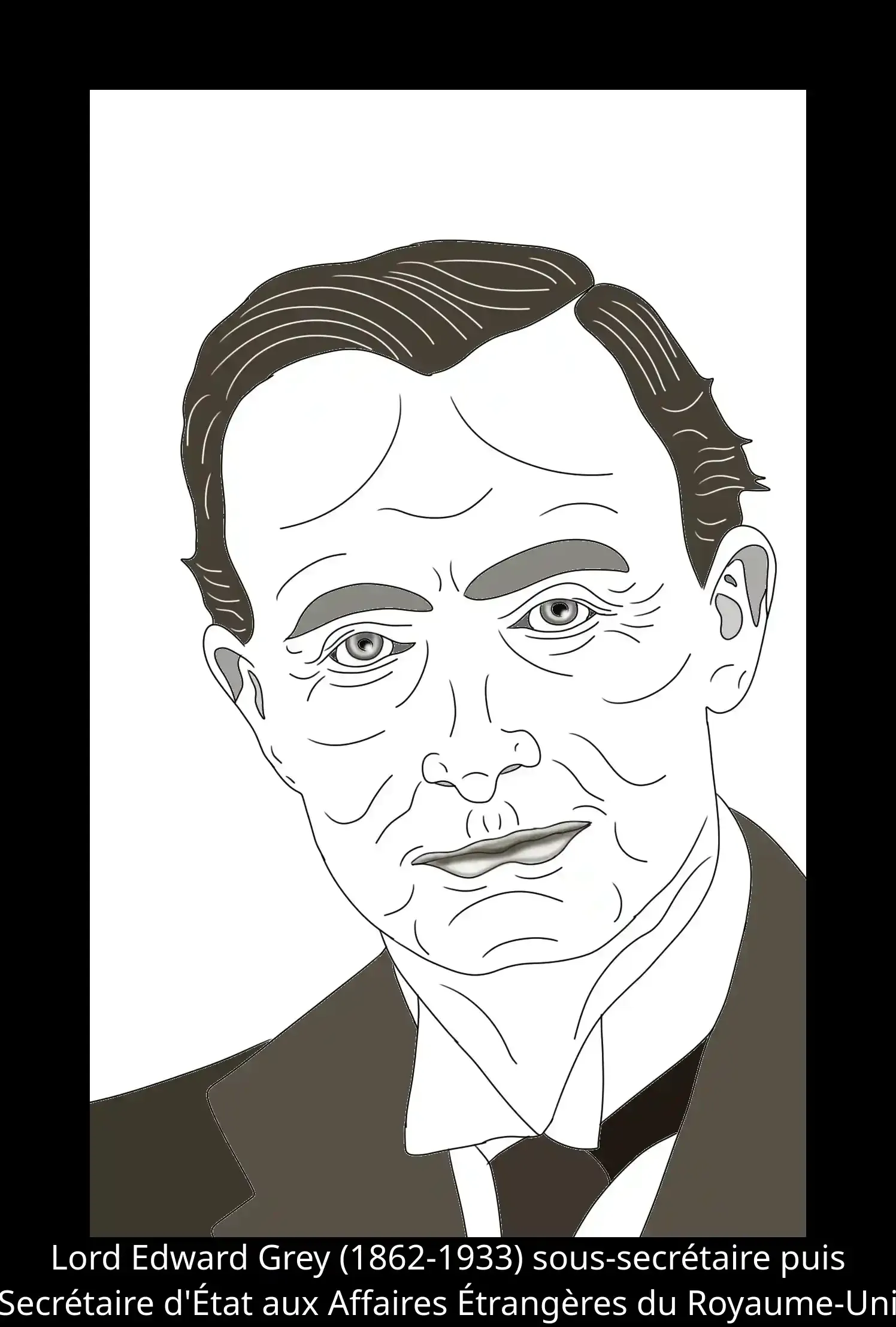
| Lord Grey to consult and/or download 170 Mo pdf (in French) |
| Back June 14, 1925 |