|
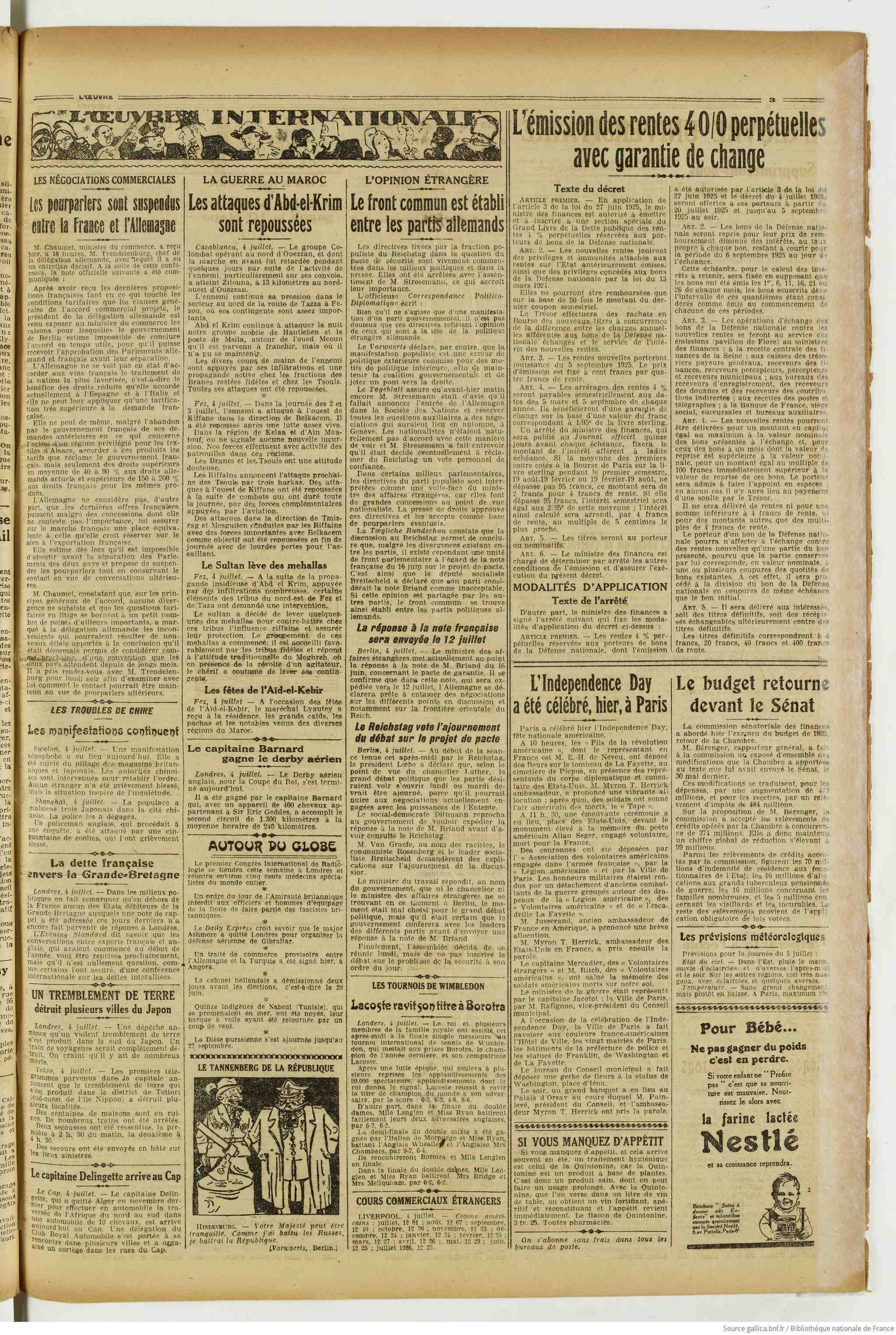 FOREIGN OPINION FOREIGN OPINION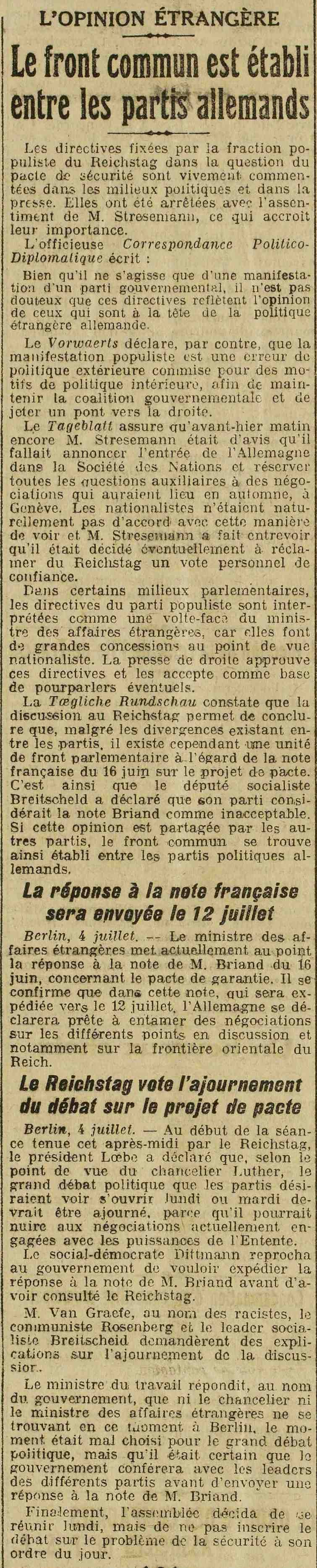
A common front is established among the German parties
The guidelines set by the populist faction in the Reichstag regarding the security pact are being hotly debated in political circles and the press. They were adopted with the consent of Mr. Stresemann, which increases their importance.
The unofficial "Correspondence Politico-Diplomatique" writes:
Although this is only a demonstration by a government party, there is no doubt that these guidelines reflect the opinion of those at the helm of German foreign policy.
The Vorwaerts, on the other hand, declares that the populist demonstration is a foreign policy error committed for domestic political reasons, in order to maintain the government coalition and build a bridge to the right. The Tageblatt reports that as recently as the day before yesterday morning, Mr. Stresemann was of the opinion that Germany's entry into the League of Nations should be announced and all ancillary issues reserved for negotiations to be held in Geneva in the autumn. The nationalists naturally disagreed with this view, and Mr. Stresemann hinted that he was eventually determined to demand a personal vote of confidence from the Reichstag.
In some parliamentary circles, the directives of the Populist Party are interpreted as a volte-face by the Foreign Minister, as they make major concessions to the nationalist point of view. The right-wing press approves of these directives and accepts them as a basis for possible talks.
The Tægliche Rundschau notes that the discussion in the Reichstag allows us to conclude that, despite the differences between the parties, there is nevertheless a united parliamentary front regarding the French note of June 16 on the draft pact. Thus, Socialist MP Breitscheld declared that his party considered the Briand note unacceptable. If this opinion is shared by the other parties, a common front has thus been established among the German political parties.
The reply to the French note will be sent on July 12.
Berlin, July 4. -- The Minister of Foreign Affairs is currently finalizing the reply to Mr. Briand's note of June 16, concerning the Guarantee Pact. It has been confirmed that in this note, which will be sent around July 12, Germany will declare its readiness to begin negotiations on the various points under discussion, particularly on the eastern border of the Reich.
The Reichstag votes to adjourn the debate on the draft pact.
Berlin, July 4. At the beginning of the Reichstag session held this afternoon, President Loebe declared that, according to Chancellor Luther, the great political debate that the parties wished to open on June or Tuesday should be adjourned because it could harm the negotiations currently underway with the Entente powers.
The Social Democrat Dittmann criticized the government for wanting to expedite the reply to Mr. Briand's note before consulting the Reichstag.
Mr. Van Graefe, on behalf of the racists, the communist Rosenberg, and the socialist leader Breitscheid demanded an explanation for the adjournment of the discussion.
The Minister of Labor replied, on behalf of the government, that since neither the Chancellor nor the Minister of Foreign Affairs were currently in Berlin, the time was ill-chosen for the great political debate, but that he was certain that the government would confer with the leaders of the various parties before sending a reply to Mr. Briand's note. Finally, the assembly decided to meet on Monday, but not to include the debate on the security issue on its agenda.
|