Nouvelles des ports

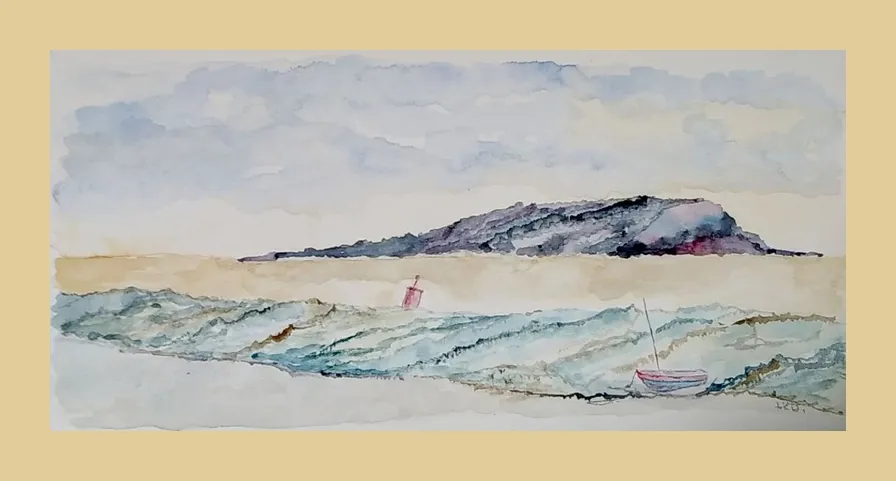
aquarelle marine - marine watercolor

Rafiots et compagnies

aquarelle marine cargo au mouillage - marine watercolor cargo ship at anchor

Nouvelles des escales

aquarelle marine - marine watercolor


Le Petit Parisien July 26, 1925

THE QUESTION OF DEBT
Le Petit Parisien 1925 0 26 Page 01 la dette de la France HOW OUR PAYMENTS TO THE UNITED STATELe Petit Parisien 1925 0 26 art 01 la dette de la France aux USA et la Grande Bretagne 1

AND ENGLAND WOULD BE MADE

At a time when upcoming negotiations with the United States and England for the settlement of France's debt are being announced, it is worthwhile to take a close look at what such a settlement might look like in practice. We often lose sight of the fact that payments from one country to another are not made with the same simplicity as those made between nationals of the same state.
First, a word on the magnitude of the problem. France owes approximately $3.8 billion, including interest, to the United States and £620 million to Great Britain. This represents approximately 35 billion gold francs, almost 150 billion of our paper francs. We will not consider here the possibility of reducing debt repayments, nor the possible offsetting of certain debts we hold against other countries, notably those resulting from the adoption of the Dawes Plan. Equity and logic argue that when examining the debt problem, "all the elements affecting it" should be taken into account, according to the very words of the Herriot-Macdonald memorandum drafted a year ago. But that is the business of the negotiators.
We will adopt the simple, down-to-earth perspective of the actual payment. What will happen at each repayment deadline that we may have to make to the coffers of our creditor friends, who are obviously no Shylocks?
Determining the Frenchman's ability to pay will obviously be the basis for developing a payment plan; the tax burden, already so heavy, can hardly be increased. But even if, by a superhuman feat of energy and endurance, our country were to manage to raise considerable sums from itself each year for its creditors—1, 1 1/2, or 2 billion francs per year, for example—the payment plan would still not be executed. There would still be a difficulty to overcome, and a very great one: actually placing these riches in the hands of the British and Americans, that is, overcoming the obstacle of "transfer."
It will be necessary, beyond all considerations of equity and sentiment, deliberately left out of this presentation, to take into account in the settlement under consideration this problem of transfers, which seemed important enough to Mr. Dawes and his colleagues for them to make it the basis of their system: by neglecting it, the negotiators of the reparations agreements erred for four years and fostered regrettable illusions in their respective countries. The transfer of capital from one country to another cannot be carried out in gold because the quantities of precious metal available are not sufficient. It can therefore only be carried out by the delivery of goods that compete with the producers of the creditor country or by remitting fiduciary currencies (notes or checks). But the French government can only collect francs from its nationals. However, it owes dollars and pounds sterling. It must therefore sell its notes or checks on the stock exchange to holders of dollars or sterling who need francs, for example, to pay for a purchase of goods in France. But since, in principle, goods purchased in France by Americans and British are offset by goods purchased in the United States or England by French people, sellers of dollars and sterling will only be found if the value of goods imported from France to England or the United States is greater than that of goods exported from these countries to France. This amounts to saying that our creditors will only buy French currency if their trade with France is in deficit. It is understood that the quantity of francs that will find an exchange for dollars and sterling under such conditions is very limited.

There will be another category of citizens of New York or London who will be buyers of francs on the market: these are those who want to exchange an asset in their own currency for an asset in francs in order to invest the latter in French companies, or to acquire goods in France. It is this second transfer method, above all, which has been used for several years, since we had to face both the enormous export deficit in 1919 and 1920 and large repayments of foreign loans contracted during the war, apart from our political debt... And this is why we see so many foreign banks establishing themselves lavishly in our buildings and so many foreigners participating in the management of our industries. For the reasoning which has just been made for Anglo-Saxon currencies applies, of course, to the florin, the peso, to all appreciated currencies. We have only been able to make the massive payments abroad to which we were forced by "denationalizing" part of our wealth on our own territory, by transferring it cheaply to foreigners, to competitors. Those who do not believe in the capital importance of the question of transfer in these matters have only to look around them to discover the effects, alas! all too obvious... We already have, this year, to transfer for the service of our commercial debt nearly 60 million dollars and 12 million pounds, that is to say more than 2 billion 200 million francs to the United States and Great Britain... To demand that significant payments for the political debt be added to this would be to want the precipitous and hopeless fall of the franc. The very fact that the mass of our transferable capital is limited has the consequence of obliging the French government, by admitting that the strictly budgetary question does not arise, to settle the debt to Great Britain and that to America at the same time. Creditor governments unfortunately have to reckon with their public opinions, which are poorly informed about the issues raised by international payments... But public opinion will be educated among the man in the street of London and New York, just as it has been among the average Frenchman, who has finally accepted, as an inescapable necessity, the reduction of his debt to Germany.

One cannot cite the payments made by Great Britain to the United States to contradict this argument. London, in fact, takes 37 million pounds sterling annually paid to New York from the approximately 200 million pounds sterling net income of its foreign investments without harm to its currency. We do not have this resource. If, faced with the need to obtain foreign currency at all costs, the French government were to dump enormous quantities of its currency on the market, it would only find buyers at a low price. And the franc would suffer the fate of the mark... No one imagines that our former allies would want to drag France into such a catastrophe!

René Marlioz.

Back July 26, 1925