

| L'Intransigeant - March 08, 1925 |

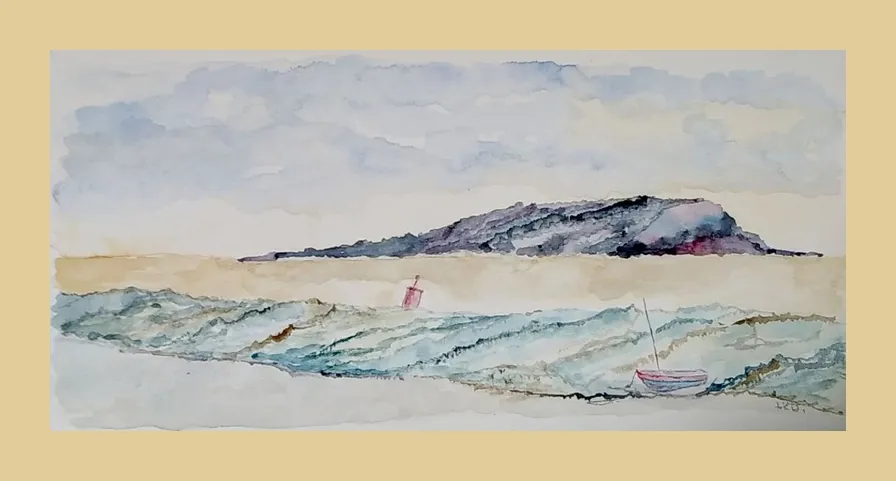
THE CAUSEWAY OF SEIN Island of Sein, March (from our part. corr.). Then, the peninsula disappeared under the waves, leaving as vestiges only this uninterrupted series of rocks that we call today the Causeway of Sein and in the middle of which the island stretches. Barely separated by narrow alleys where it is difficult to pass in pairs, the houses are reminiscent of bathers who have been surprised on a rock that the rising tide threatens to submerge. In 1864, during a storm from the S.-S.-E., the town was nearly destroyed; two years later, the village was again invaded, several houses were demolished. On September 24, 1896, a tidal wave renewed the damage; on March 5, 1912, the sea again submerged the quays, houses, and fields; from 4 to 7 o'clock in the morning, the waves broke into the alleys, carrying boats and fishing gear! In January 1924, the event was repeated just as it had during the last storm. The wind is still blowing today. Under the rain that closes the horizon, the island, from the top of the waves, appears sadder and more desolate. How we understand at this moment why the women there eternally wear the mourning headdress! What would remain of Sein if, one day, the inhabitants had not become aware of the terrible threat that weighed on them. To stop the destructive force of the sea, they piled up stones in the most threatened places. But these dikes were often broken. The administration of Bridges and Roads intervened. It built a quay with a parapet in front of the buildings, then, all around, dikes reaching four meters wide. Faced with this engulfment whose fatality is so clearly apparent, what do the inhabitants do? They emigrate to the continent, one might think! What a mistake if one concluded in this way! In 1880, the island of Sein had 650 inhabitants, it has no fewer than 1,200 today! CH. LÉGER
|
| Back March 08, 1925 |