

| L'Oeuvre 22 octobre 1924 |
 |
|
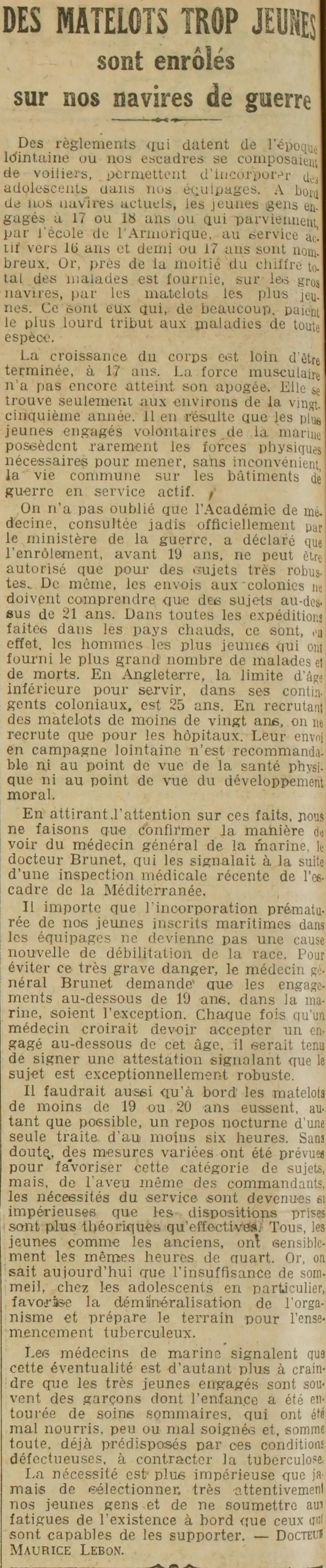
TOO YOUNG SAILORS Regulations dating from the distant era when our squadrons were composed of sailing ships, allow us to incorporate adolescents into our crews. On board our current ships, young people enlisted at 17 or 18 years of age or who reach active service at around 16 and a half or 17 years of age through the Armorica school are numerous. However, nearly half of the total number of sick people is provided, on large ships, by the youngest sailors. They are the ones who, by far, pay the heaviest price for diseases of all kinds. The growth of the body is far from complete at 17 years of age. Muscular strength has not yet reached its peak. It is only found around the twenty-fifth year. The result is that the youngest volunteers in the navy rarely possess the physical strength necessary to lead, without inconvenience, the common life on warships in active service. By drawing attention to these facts, we are only confirming the view of the Navy's general surgeon, Dr. Brunet, who reported them following a recent medical inspection of the Mediterranean squadron. It would also be necessary for sailors under 19 or 20 years of age on board to have, as far as possible, a night's rest in one go of at least six hours. Undoubtedly, various measures have been planned to favour this category of subjects, but, by the admission of the commanders themselves, the necessities of the service have become so pressing that the arrangements made are more theoretical than effective. All, young and old alike, have roughly the same watch hours. Now, we know today that insufficient sleep, particularly among adolescents, promotes the demineralisation of the body and prepares the ground for the inoculation of tuberculosis. Naval doctors report that this eventuality is all the more to be feared since the very young recruits are often boys whose childhood was surrounded by summary care, who were poorly fed, little or badly cared for and, all in all, already predisposed by these defective conditions to contracting tuberculosis. The need is more pressing than ever to select our young people very carefully and to subject to the fatigues of existence on board only those who are capable of supporting them. DOCTOR MAURICE LEBON |
| retour - back 22 octobre 1924 |