


| Le Petit Écho de la mode 28 septembre 1924 |
|
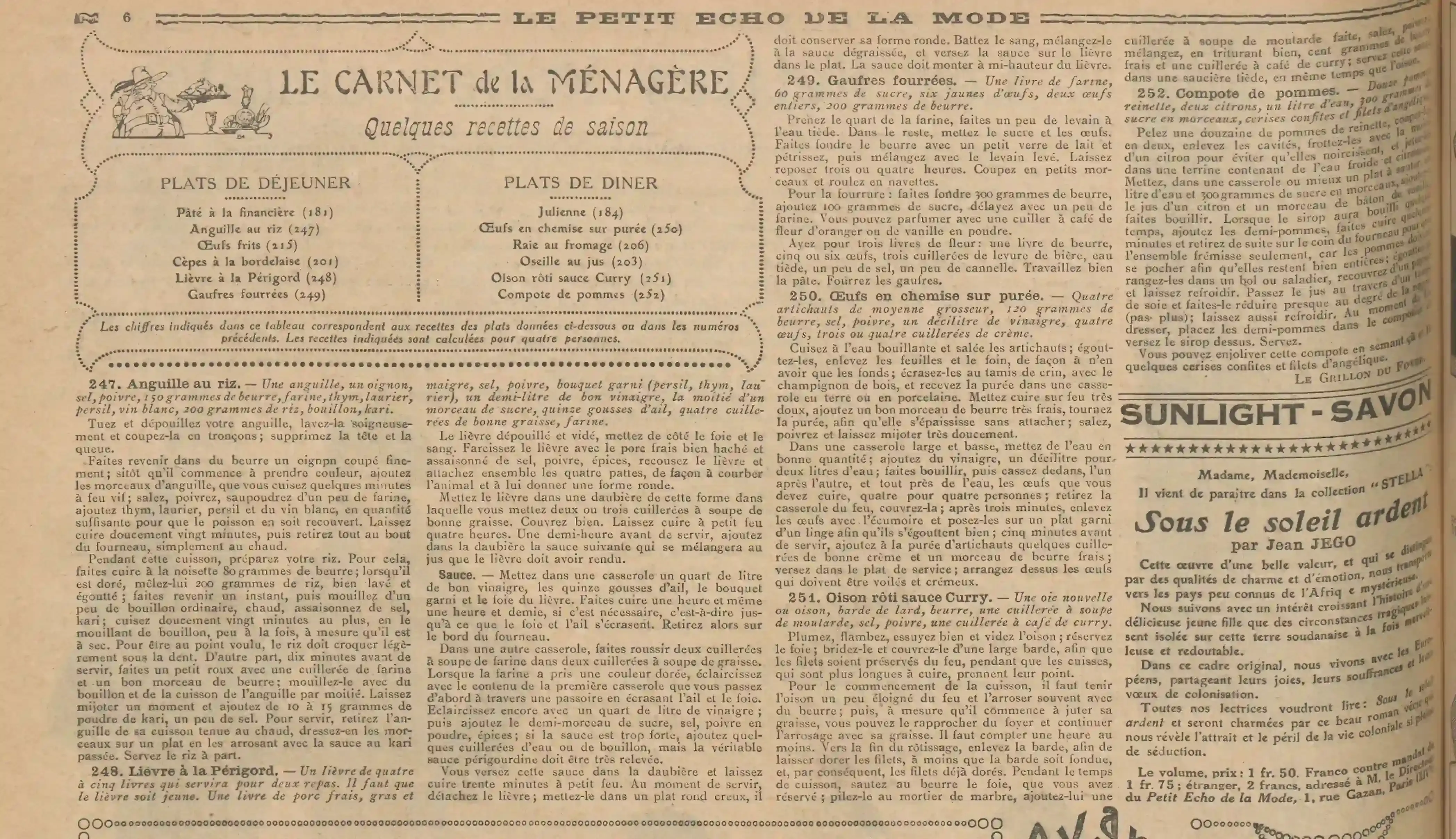
LUNCH DISHES Pâté à la financiere (181) DINNER DISHES Julienne (184) 247. Eel with rice.- One eel, one onion, salt, pepper, 150 grams of butter, flour, thyme, bay leaf, parsley, white wine, 200 grams of rice, broth, kari. Kill and skin your eel, wash it carefully and cut it into pieces; remove the head and tail. 248. Hare à la Périgord. - A hare of four to five pounds that will serve for two meals. The hare must be young. A pound of fresh pork, fat and lean, salt, pepper, bouquet garni (parsley, thyme, bay leaf), half a liter of good vinegar, half a lump of sugar, fifteen cloves of garlic, four spoonfuls of good fat, flour. The hare skinned and gutted, set aside the liver and blood. Stuff the hare with the fresh pork well chopped and seasoned with salt, pepper, spices, sew up the hare and tie the four legs together, so as to curve the animal and give it a round shape. Place the hare in a casserole dish of this shape in which you put two or three tablespoons of good fat. Cover well. Let cook over low heat for four hours. Half an hour before serving, add the following sauce to the casserole dish which will mix with the juice that the hare must have given off. 249. Stuffed waffles. A pound of flour, 60 grams of sugar, six egg yolks, two whole eggs, 200 grams of butter. Take a quarter of the flour, make a little leaven with warm water. In the rest, put the sugar and eggs. Melt the butter with a small glass of milk and knead, then mix with the leaven. Let stand three or four hours. Cut into small pieces and roll into shuttles. For the fur: melt 300 grams of butter, add 100 grams of sugar, dilute with a little flour. You can flavor with a teaspoon of orange blossom or vanilla powder. 250. Eggs in their jackets on puree. Four medium-sized artichokes, 120 grams of butter, salt, pepper, a deciliter of vinegar, four eggs, three or four spoonfuls of cream. Cook the artichokes in boiling salted water; drain them, remove the leaves and hay, so as to have only the bottoms; crush them in a horsehair sieve, with the wood mushroom, and receive the puree in an earthenware or porcelain saucepan. Put to cook on a very low heat, add a good piece of very fresh butter, stir the puree, so that it thickens without sticking; salt, pepper and let simmer very gently. In a wide and low saucepan, put a good quantity of water; add vinegar, a deciliter for two liters of water; boil, then break into it, one after the other, and very close to the water, the eggs that you must cook, four for four people; remove the pan from the heat, cover it; after three minutes, remove the eggs with the skimmer and place them on a dish covered with a cloth so that they drain well; five minutes before serving, add to the artichoke puree a few spoonfuls of good cream and a piece of fresh butter; pour into the serving dish; arrange the eggs on top, which must be veiled and creamy. 251. Roasted goose with Curry sauce. A new goose or gosling, bacon strips, butter, a tablespoon of mustard, salt, pepper, a teaspoon of curry. Pluck, flambé, dry well and empty the gosling; reserve the liver; tie it up and cover it with a large bard, so that the fillets are protected from the fire, while the thighs, which take longer to cook, take their point. To begin cooking, you must keep the goose a little away from the fire and baste it often with butter; then, as it begins to ooze its fat, you can bring it closer to the hearth and continue basting with its fat. It takes at least an hour. Towards the end of roasting, remove the bard, in order to let the fillets brown, unless the bard is melted, and, consequently, the fillets already browned. During the cooking time, sauté the liver, which you have reserved, in butter; pound it in a marble mortar, add a tablespoon of mustard, salt, pepper; mix, while grinding well, one hundred grams of fresh butter and a teaspoon of curry; Serve this sauce in a warm sauceboat, at the same time as the goose. 252. Apple compote. Twelve Reinette apples, two lemons, one liter of water, 300 grams of sugar cubes, candied cherries and angelica fillets Peel a dozen Reinette apples, cut them in half, rub them with half a lemon to prevent them from blackening, remove the cavities, and throw them into a terrine containing cold, lemony water. THE FIREPLACE CRICKET. |
 |
| Retour - Back 28 septembre 1924 |