|
EVENING REFLECTIONS
The sleeping rowers
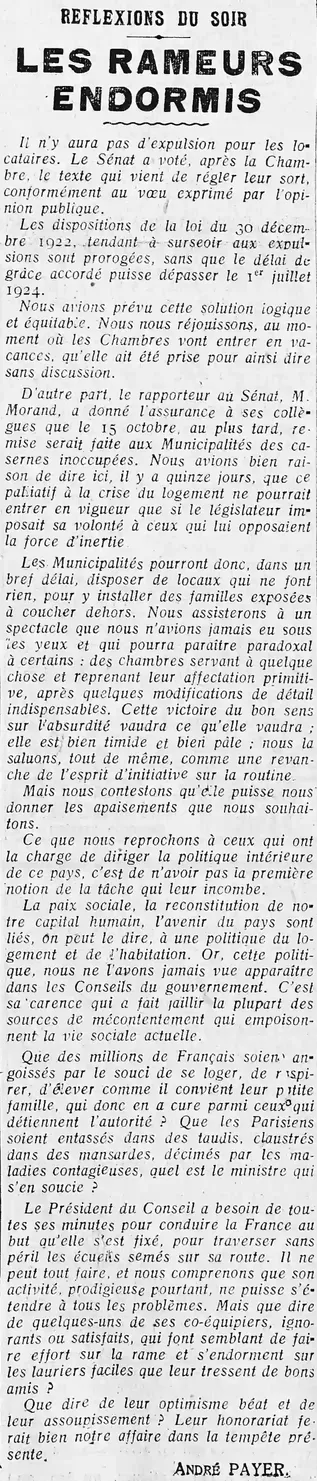
There will be no eviction for tenants. The Senate voted, after the Chamber, the text which has just settled their fate, in accordance with the wish expressed by public opinion. The provisions of the law of December 30, 1922, tending to suspend expulsions are extended, without the grace period granted being able to exceed July 1, 1924. We had planned this logical and equitable solution. We are delighted, at a time when the Chambers are going into recess, that it was taken, so to speak, without discussion.
On the other hand, the rapporteur in the Senate, Mr. Morand, assured his colleagues that on October 13, at the latest, the unoccupied barracks would be handed over to the Municipalities. We were right to say here, two weeks ago, that this palliative to the housing crisis could only come into force if the legislator imposed his will on those who opposed him with the force of inertia.
Municipalities will therefore be able, in a short time, to have premises that do nothing, to accommodate families at risk of sleeping outside. We will witness a spectacle that we have never seen before and which may seem paradoxical to some: Rooms serving a purpose and resuming their original purpose, after some essential modifications of detail.
This victory of common sense over absurdity will be worth what it is worth, it is very timid and very pale; we welcome it, all the same, as a revenge of the spirit of initiative on routine. But we deny that it can give us the reassurance we want. What we reproach those who are responsible for directing the internal policy of this country is that they do not have the first notion of the task incumbent upon them. Social peace, the reconstitution of our human capital, the future of the country are linked, we can say, to a housing policy. However, we have never seen this policy appear in government councils. It is its deficiency which has given rise to most of the sources of discontent which poison current social life.
That millions of French people are distressed by the worry of housing, of breathing, of raising their little family properly, who among those who hold authority cares? That Parisians are crammed into slums, confined in attics, decimated by contagious diseases, which minister cares?
The President of the Council needs all his time to lead France to the goal it has set for itself, to safely cross the pitfalls strewn along its path. He cannot do everything, and we understand that his activity, although prodigious, cannot extend to all problems. But what can we say about some of his teammates, ignorant or satisfied, who pretend to make an effort on the oar and fall asleep on the easy laurels bestowed upon them by good friends? What can we say about their blissful optimism and their contentment? Their honoraria would do us well in the present storm.
ANDRÉ PAYER
|