

| Excelsior 27 mars 1924 |
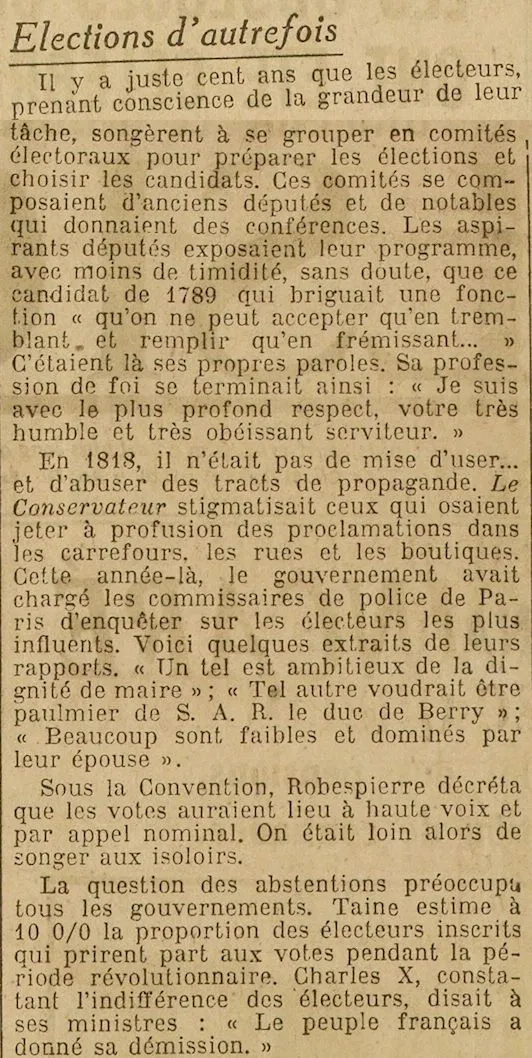
Elections of the pastIt was just a hundred years ago that voters, realizing the magnitude of their task, thought of grouping themselves into electoral committees to prepare for the elections and choose the candidates. These committees were made up of former deputies and notables who gave lectures. The aspiring deputies presented their program, with less timidity, no doubt, than this candidate of 1789 who sought a position "that one can only accept by trembling and fulfill only by quivering... These were his own words. His profession of faith ended as follows: “I am, with the deepest respect, your very humble and very obedient servant. >> In 1818, it was not appropriate to use... and abuse propaganda leaflets. The Conservative stigmatized those who dared to profusely issue proclamations in intersections, streets and shops. That year, the government had charged Paris police commissioners with investigating who voted most. influential. Here are some extracts from their reports. “So and so is ambitious for the dignity of mayor”; “Someone would like to be the shoulder of HRH the Duke of Berry”; “Many are weak and dominated by their wives.” Under the Convention, Robespierre decreed that votes would take place aloud and by roll call. We were far from thinking about voting booths then. The question of abstentions preoccupied all governments. Taine estimates the proportion of registered voters who took part in voting during the revolutionary period at 10%. Charles X, noting the indifference of voters, told his ministers: “The French people have resigned.” |
 |